
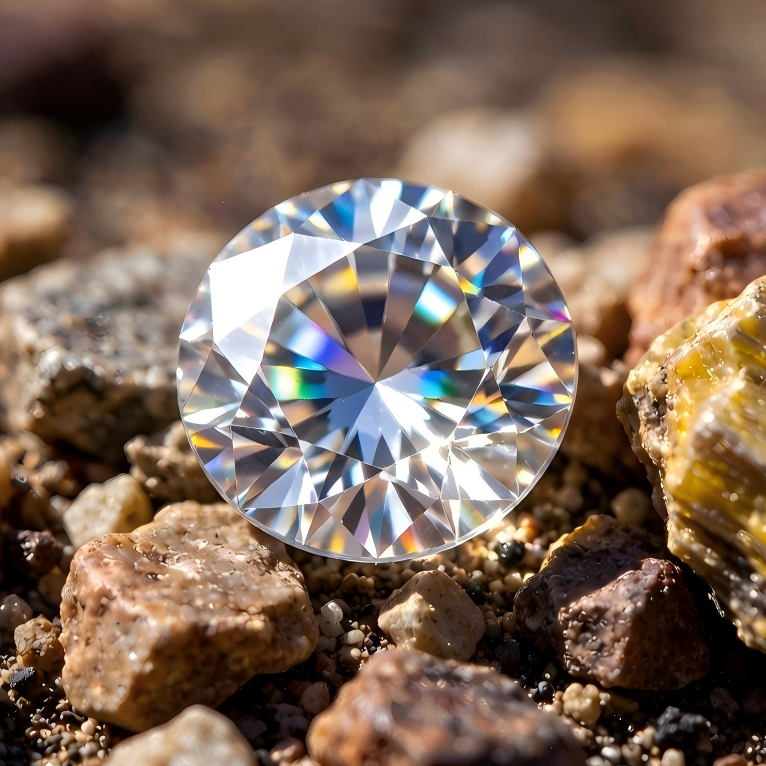
 The concept of ashes-to-diamonds was first introduced by a Chicago-based memorial company named "Life Gem." In 2004, the three founders of the company filed a patent claiming they had developed a technique to transform the ashes obtained from cremated human remains into diamonds. Following extensive experimentation, Greg Herro, the company's leader, successfully created the first diamond from human ashes in July 2006 after communicating with the bereaved family.
Since then, the technology behind ashes-to-diamonds has undergone three iterations, with the extraction process of carbon elements being significantly optimized. This has gradually relaxed the requirement for the amount of ashes needed, allowing even pet ashes to be transformed into smaller diamonds. The color of the diamonds has also become increasingly controllable, with at least five colors achievable through varying pressures, temperatures, and doping processes.
The first generation of ashes-to-diamonds technology was prevalent between 2005 and 2009. During this period, the technology was quite immature, requiring a large amount of ashes (approximately 500 grams, making it impossible to create diamonds from pet ashes) and only producing a single color (blue, not yet achieving the purest white). Diamond cultivation took six months to a year and has been largely phased out by most companies. The purity of the first-generation technology was insufficient, allowing only for the creation of blue ashes-to-diamonds.
The second-generation technology was used between 2009 and 2012. By this time, the technology had advanced, requiring only 150 grams of ashes, and pet ashes could also be made into diamonds. Through different temperatures and pressures (using HPHT technology), up to five colors could be achieved. The second-generation technology could produce the purest white diamonds, but due to the complexity of the white diamond technology and high environmental requirements for cultivation, the cost was prohibitively expensive.
The third-generation technology became prevalent after 2012, needing only 100 grams of ashes to achieve 100% extraction of carbon for diamond cultivation. Colored diamonds could be cultivated up to 1 carat, even 2 carats, and the process took only three to four months.
As of 2021, most companies operating in the ashes-to-diamonds business still employ HPHT technology. Specifically, the process begins with extracting carbon elements from the ashes: placing the ashes in a high-temperature, inert atmosphere to remove residual elements such as carbonates, phosphates, boron, etc., resulting in graphite-form carbon elements, which are then ground into fine powder and then goes through a series of processes to make a perfect diamond.